

Speaking of hurdles. All of our lives are complicated but the lives of refugees can be increasingly so. It had been about 6 weeks post arrival when Mr. Omari mentioned that he had a twin brother living in another US City about 1,000 miles away. The brother and his family are refugees, have been in the US about a year, and has a job with opportunities for Mr. Omari. He was very emotional and expressed the family’s desire to move there and be closer to them. My reactions went like this…” Yikes this is impossible! Of course we can help you! Yikes this will be difficult! But of course we will help you get there! Why don’t you go now! Why don’t you settle here, save money, then move! We will find people to help you there! ” You get the drift. Our team pow wowed about this issue and the best ways to address it. Of course this is a free country, and as people with refugee status, they are allowed to move freely throughout the US as they please. The biggest barrier is money, as it always tends to be.
Money, of course. But also naivety of the intricacies of moving: finding an available apartment, renting without a job, filling out applications, setting up utilities, understanding public transit in a new place, finding doctors, enrolling in school, setting up state benefits etc. And, not to minimize the hurdles of logistics: getting a family of 6 to book flights, get on the airplane or bus or train, get a ride from the airport, coordinating with landlord to allow entrance into the apartment and so on.
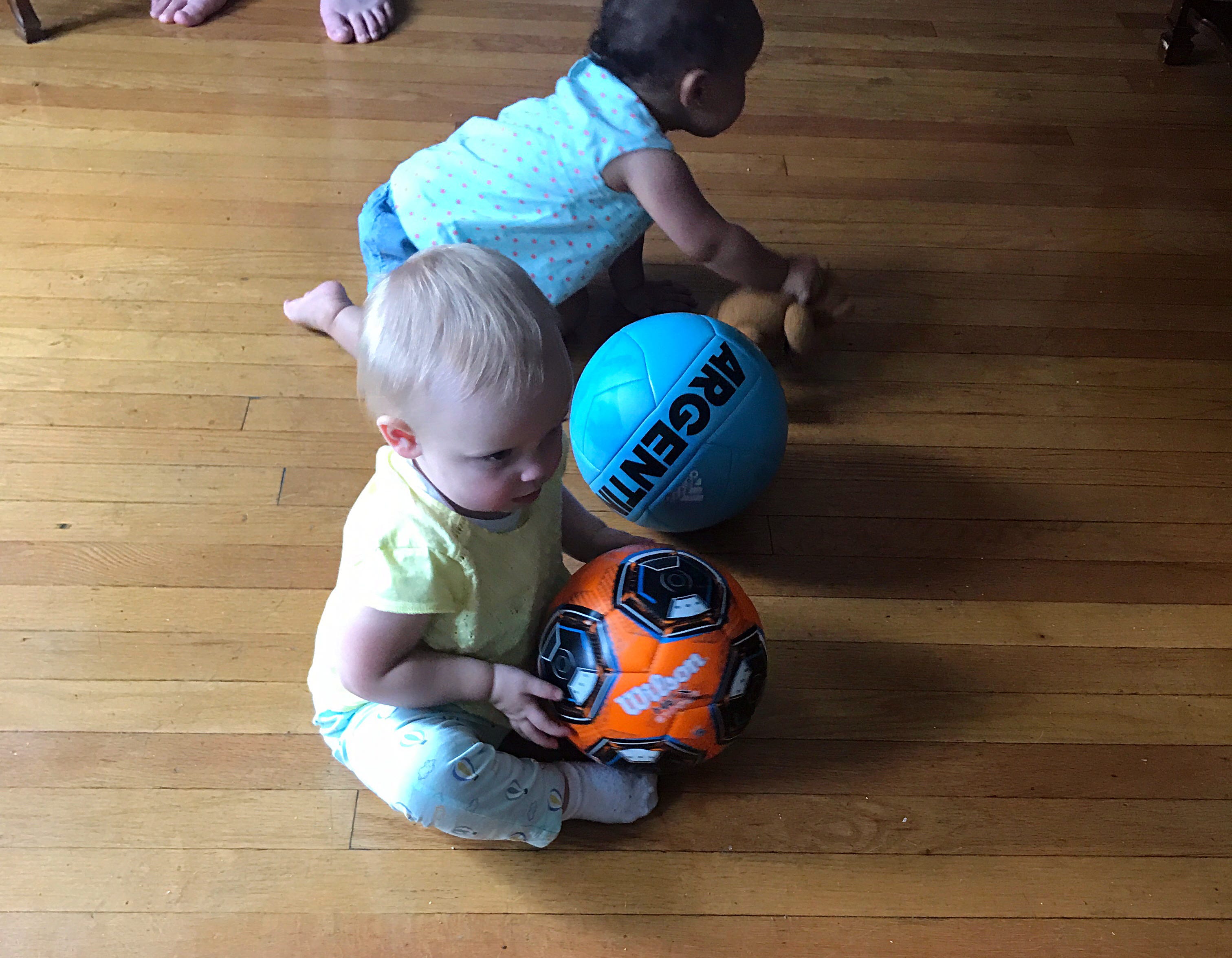
(Playing at their house with our kids- discussing options)
As the team brainstormed ways to assist monetarily, coordinating with other agencies in the city to aid with the logistics of resettling, I discussed the issue with RefugeeONE. This is not a new situation to them. Refugees oftentimes will move to a secondary location but it is more easily done when arranged immediately, before the agency spends money on the family. RefugeeONE brought up many good points and valid concerns about them moving. Sometimes refugees will be promised greener pastures and easier settling opportunities. The refugees will go to the secondary location only to be disappointed and want to return to original location. By that time the settling agency can’t accept them back. This is a pretty big problem, but also, my team badly wanted the Omari’s to be able to be with their other close family members.
Weeks went by as we were grappling with this issue and how to help the Omari’s in the best way. Then, two weeks ago, as Elly and I were hoping to have the final “these are the barriers and these are ways we will help you get there” conversation, they said they were going to stay in Chicago. Mr. Omari had applied for a job and they were excited about Mrs. Omari’s health care, children’s school opportunities and starting a life here. Well, okay! Let’s do this!
The moral of the story is, nothing will surprise me with this experience. There are so many twists and turns and emotions. A good practice in flexibility and compassion, for sure.